

AI Search Optimization for Franchise Brands
 Strategy led by Austin Coker, Founder of 95 Projects
GEO for franchises is how a franchise brand gets named, along with the right nearby location, when someone asks ChatGPT, Gemini, Perplexity, Claude or Google's AI Mode where to go. We run it as a senior-led program for franchisors and multi-unit groups, covering the brand entity, every location, the data franchisees control and the prompts that matter in each market, reported to the franchisor in one view.
Book a Call See our results ›




GEO for franchises (generative engine optimization) is the work of getting AI search engines to name your franchise brand and the correct local location when people ask for a recommendation. It covers how the brand and each location are defined as entities, how consistent franchisee data is across the web, what reviews and third-party sources say about each location, and whether AI crawlers can read your pages. The goal is accurate, location-level answers in every engine your customers and prospective franchisees use.
Each engine pulls from different sources and settles the brand-versus-location question in its own way, so a franchise can look strong in one and invisible in another.
| Engine | What it draws on | How it resolves brand vs location |
|---|---|---|
| ChatGPT | Trained knowledge plus live web results when search runs, tending to pull from brand sites, review platforms, local listings and editorial roundups. | Often names the brand first, then picks a location when the prompt includes a city or the user shares their location. Conflicting listings can lead it to the wrong address. |
| Perplexity | Live web retrieval with visible citations, frequently leaning on recent articles, directories, review pages and well-structured location pages. | Tends to cite whichever page describes a specific location most clearly, so thin or duplicated location pages can lose out to a directory listing. |
| Gemini | Google's index and business data, including Business Profiles, Maps information and reviews, alongside the open web. | Appears to lean on Google's local data for location detail, so mismatches between your site and your profiles can surface as inconsistent answers. |
| Claude | Trained knowledge and, where web search is enabled, retrieved pages, tending to favor clear, factual sources over promotional copy. | Without search it may only know the brand. With search, it relies on location pages and listings that state the parent brand and local details plainly. |
| Google AI Overviews and AI Mode | Google's index, local data and pages that already rank or are judged helpful for the query, summarized into a generated answer. | Location answers usually reflect local search signals, while brand questions draw more on reviews, comparison content and the brand's own pages. |
Customers ask AI engines about your franchise in a handful of predictable ways, and each one is decided by different signals.
| Prompt type | Example prompt | What decides the answer |
|---|---|---|
| Service near me | "Best kids' math tutoring near me in Scottsdale" | Proximity, how clearly the location page states its services and service area, and whether review language matches the request. |
| Brand vs competitor | "Is [Brand] or [Competitor] better for in-home senior care?" | Third-party comparisons, review themes across the whole system, and how clearly the brand explains what it does differently. |
| Is [brand] worth it | "Is [Brand] worth the membership price?" | Franchise-wide reputation. Complaints tied to a few locations can color the answer for every location in the system. |
| Franchise vs independent | "Should I hire a franchise or a local independent for lawn care?" | Whether sources explain the brand's standards, training and accountability across locations, and whether local reviews back that up. |
| Location detail | "Is the [Brand] in Overland Park open Sunday, and does it do teeth whitening?" | Hours, services and contact details on the location page, profiles and listings, and whether those sources agree. |
Brand-level reputation travels: complaints in one market can shape how engines describe every location, so we track brand prompts and location prompts side by side.
Engines need to understand the brand once, and every location as part of it.
Organization markup states the official name, logo, headquarters and the profiles that belong to you. A canonical brand facts page repeats it in plain text, so AI engines have one source to check everything else against.
Every location page carries LocalBusiness markup pointing back to the brand, with one naming convention such as [Brand] [City] used on the site, profiles and listings, so engines read each unit as part of your system.
Name, category, service descriptions and key facts read the same on the brand site, location pages, social profiles, directories and franchise listings, so engines never have to guess which version is true.
Data governance
Franchisees change hours, add services, close units and reopen elsewhere, and each change lands on some sources and misses others. AI engines read all of them, so a mismatch between the location page, the Business Profile and a directory listing turns into a confident wrong answer.
Book a CallHoliday hours on one profile, summer hours on the site, last year's hours on a directory. Engines may quote any of them, and the customer who finds a locked door blames the brand.
A location page copied from the brand template lists every service, but this franchisee doesn't offer two of them. AI engines will still recommend that location for those services.
Closed or relocated units often stay live on listings and old pages, and engines keep naming them until every source is updated or redirected.
The franchisor owns brand facts; franchisees own hours and local services through one approved workflow, and a monthly check of AI answers in every market catches anything that drifted.
Engines corroborate before they recommend. These are the sources that tie each location to its market.
A location whose reviews mention specific services, staff and neighborhoods is easier to match to a detailed prompt. We help franchisees ask for reviews that bring that language out naturally.
A feature in a local paper or city business journal ties a location to its market in a source engines trust, built around genuinely local news like an opening or a community program.
When someone asks which brand is best, engines lean on "best of" lists and comparison articles. Getting into the roundups already cited for your category moves answers fastest.
Chamber listings, industry associations, parent groups and local sponsorship pages confirm a location is real and active, giving engines a consistent local footprint.
Prospective franchisees use AI search the same way customers do, asking for the best [category] franchises to own and what a [Brand] franchise costs. We build a canonical development page with accurate, current facts: the investment range as published in your FDD, fees, territory availability, training and support, and the steps to apply. Every development-facing fact is routed through your franchise counsel before it is published or sent to third-party sources. We do not create, imply or optimize for earnings claims or financial performance representations, and we flag AI answers that invent them so your team can respond.
Three phases, run by senior strategists across the whole system.
We check whether the crawlers behind ChatGPT, Perplexity, Claude and Google's AI features can reach the brand site and every location page. Robots rules, CDN settings and JavaScript-only content often block pages unnoticed.
We fix brand and location markup, set the naming convention, correct franchisee data across the site, profiles and listings, redirect closed locations, and put the governance workflow in place so it holds.
Customer and development prompts tracked by market across every engine, rolled into one report showing where the brand and location were named, misnamed or skipped. Multi-unit groups see it by territory.
Every account is run by senior strategists, and the same work that gets the right franchise location named has already moved revenue and recommendations for our clients.
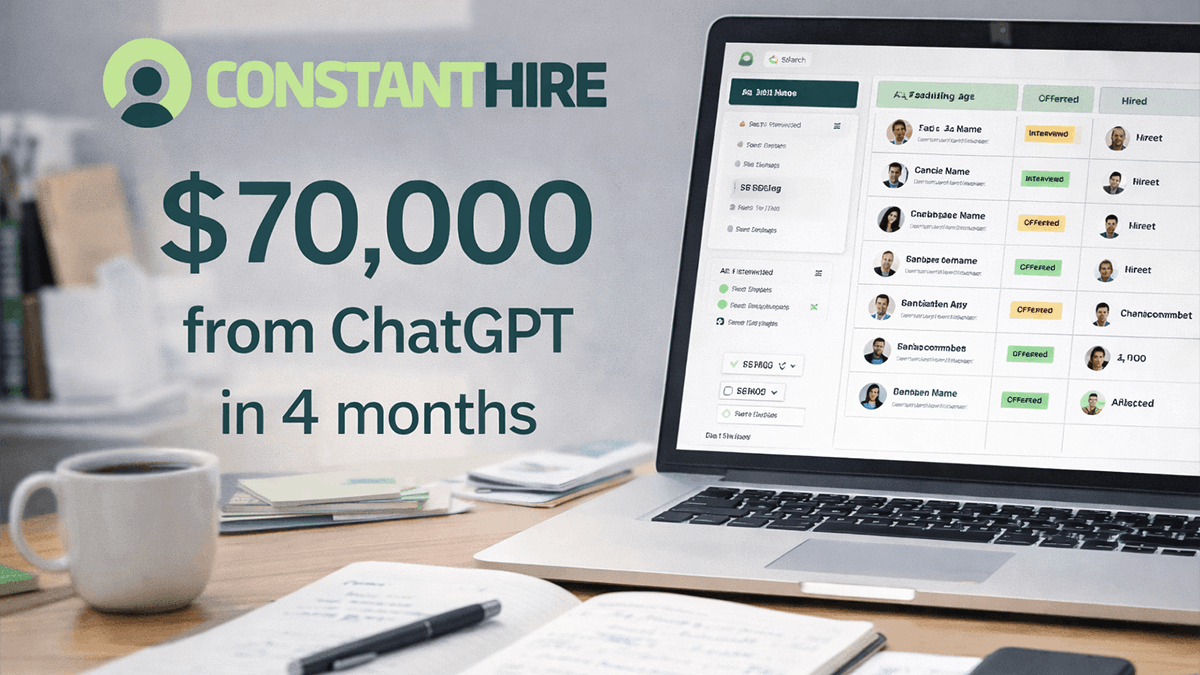
When engines name you for the right query, AI answers turn into booked business.

Once entity signals and sources line up, engines can change their answer fast.

High-ticket local search runs on the same location signals every franchise unit depends on.
Business Profiles, local pack rankings and location page templates live in our SEO for franchises program. They also feed the local data AI engines read, so most franchisors run both together.
Pair AI visibility with franchise SEO and paid coverage for every location.
Local pack, Business Profiles and location page templates for every unit in your system.
Explore Franchise SEO ›Senior-led GEO and AEO for brands that want to be named in AI answers.
Explore AI Search Marketing ›Google Ads for franchisors and multi-unit groups, structured by market and location.
Explore PPC ›AI search visibility for one of the most franchise-heavy care categories.
Explore Home Care GEO ›


Senior-led and in-house. You work with the strategists doing the work, not juniors learning on your account.
Meet the team ›Book a call with a senior strategist. We will look at how ChatGPT, Gemini, Perplexity, Claude and Google's AI answers handle your brand and a sample of your markets today, and show you where locations are being named, misnamed or skipped.
GEO for franchises is optimization that gets AI search engines to name your brand and the correct nearby location when customers or prospective franchisees ask for a recommendation. It covers brand and location entities, franchisee data consistency, reviews and earned mentions per location, AI crawler access and prompt tracking by market.
Franchise SEO focuses on rankings in Google search and the local pack through Business Profiles and location pages. GEO focuses on whether AI engines name and recommend your brand and locations in generated answers. The two share much of the same data, so strong franchise SEO makes GEO easier, and most franchisors run both.
Usually not on their own. Entity structure, brand facts and crawler access sit at the brand level, and uncoordinated franchisee efforts tend to create the inconsistencies that confuse engines. Franchisees still play a real part through accurate hours, local services, reviews and local press, inside a workflow the franchisor sets.
Engines generally treat each location as its own entity tied to the parent brand, whoever owns it. A multi-unit group benefits from consistent naming and data across all its units, and from prompt tracking by territory so it can see which of its locations get named and which get skipped.
Usually because sources disagree. Old addresses, closed units still listed, duplicate pages, unclear naming or location pages without a defined service area can all point an engine to the wrong place. Correcting the data at every source and linking each location clearly to the brand is what fixes it.
Engines that rely on live retrieval can reflect fixes within weeks once pages are crawlable and data is consistent. Answers that depend on trained knowledge or broad brand reputation take longer. Timing varies by engine and market, which is why we track prompts by market from the first month.
Yes. Prospective franchisees ask AI engines which franchises to own and what a specific brand costs. A canonical development page with counsel-approved facts, plus accurate third-party franchise listings, helps engines answer correctly. We never create or optimize for earnings claims or financial performance representations.
In most cases, yes, for the brand site and public location pages. Blocking AI crawlers can leave engines relying on directories and outdated copies instead of your current facts. Private areas, like franchisee portals and internal documents, can stay off-limits while the pages you want cited stay open.